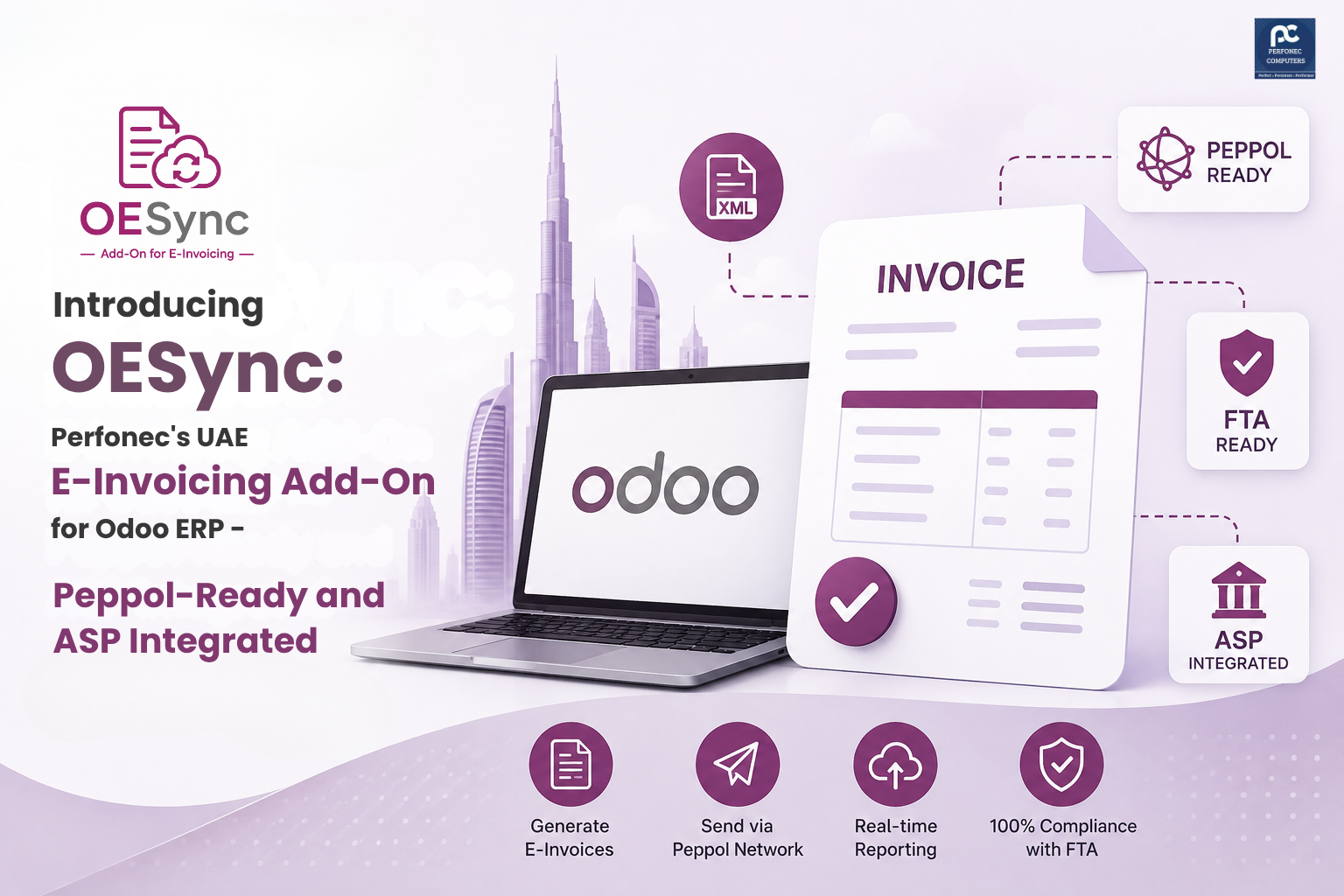
The UAE Ministry of Finance’s recent mandate requiring all B2B invoices from VAT-registered businesses to be transmitted through the Peppol network in PINT AE XML format by January 2027 poses a significant compliance challenge, particularly for those using Odoo ERP. As UAE Odoo users prepare for this transition, they must understand the intricate technical requirements and the implications of navigating the Accredited Service Provider (ASP) landscape. Most guides merely scratch the surface, glossing over the complexities that could leave businesses vulnerable to penalties if they fail to comply on time.
To address this pressing issue, OESync by Perfonec emerges as a critical solution for UAE businesses relying on Odoo ERP. This comprehensive add-on not only facilitates the required e-invoicing process—covering everything from PINT AE XML generation to secure ASP transmission—but also tackles the nuanced ASP challenge head-on. By managing all aspects of the ASP relationship, OESync allows businesses to focus on their core operations without the burden of ongoing technical dependencies. In this post, we will delve deeper into the e-invoicing mandate, unpack the complexities of the ASP problem, and highlight how OESync delivers a seamless solution for local businesses.
Understanding the urgent e-invoicing mandate for UAE Odoo users
The UAE Ministry of Finance has set a stringent timeline for B2B invoicing compliance that requires all VAT-registered businesses to transition to the Peppol network using the PINT AE XML format. Starting January 2027 for large enterprises and July 2027 for SMEs, businesses must adapt their invoicing practices to meet these new regulations. All B2B invoices issued after these dates must be structured and validated according to specific technical requirements, which include 17 mandatory fields such as supplier and buyer TRNs, VAT category codes, and structured address details. This directive fundamentally alters the invoicing landscape for UAE businesses, particularly those utilizing Odoo ERP, which does not natively support these complex compliance requirements.
UAE businesses running Odoo need to act swiftly to avoid falling behind the compliance curve. The urgency to adopt a reliable e-invoicing solution arises not only from the regulatory deadlines but also from the potential financial repercussions of non-compliance. Failure to fulfill the invoicing mandate could lead to severe penalties, amounting to AED 5,000 per month, plus AED 100 for each non-compliant invoice issued after the go-live date. To mitigate these risks, Odoo users must prioritize finding and implementing a solution like OESync by Perfonec that seamlessly integrates with their existing systems, ensuring compliance without disruption to their current workflows.
Navigating the complexities of the ASP problem and its implications
The ASP problem presents a multifaceted challenge for UAE Odoo users as they prepare for the mandatory e-invoicing regulations set by the UAE Ministry of Finance. An Accredited Service Provider (ASP) is not merely a checkbox for compliance; it represents a critical connection point between an Odoo instance and the Peppol network. As this integration requires ongoing management, businesses need to evaluate multiple ASPs based on their unique requirements, such as Odoo version, invoice volume, and industry specifics. Delaying this process can lead to costly penalties, as businesses with annual revenues exceeding AED 50 million must appoint an ASP by October 30, 2026, and all other VAT-registered businesses must do so by March 31, 2027. Missing these deadlines could result in substantial fines, further complicating the already tight timeline for compliance.
Moreover, many guides fail to adequately address the complexities and maintenance of the ASP relationship. Beyond just initial selections and submissions, ongoing operational dependencies will be required, including API credential management, monitoring the ASP's performance, and adapting to any changes they implement. For businesses lacking technical expertise, this can create significant operational burdens, distracting from core accounting functions. The misconceptions surrounding the simplicity of appointing an ASP often catch users off guard, leading to disruptions in invoicing processes. This understanding emphasizes the urgency of selecting the right solution, such as OESync by Perfonec, which streamlines the e-invoicing process and handles the ASP layer without the need for independent vendor management.
How OESync by Perfonec provides a seamless solution for UAE businesses
OESync by Perfonec addresses the intricate challenges faced by UAE businesses using Odoo ERP when it comes to compliance with the new e-invoicing mandate. By automating the complete invoicing process—from PINT AE XML generation to seamless transmission through an Accredited Service Provider (ASP)—OESync eliminates the operational burdens that typically fall on finance teams. The solution requires nothing more than a one-time setup, allowing your accounting staff to continue their usual workflow without modifications. With OESync, businesses gain peace of mind knowing that all 17 mandatory fields are validated prior to transmission, greatly reducing the risk of compliance failures and associated penalties.
Moreover, OESync simplifies the often cumbersome ASP relationship. Perfonec takes on the responsibility of managing ASP selection, onboarding, and ongoing support, freeing businesses from the complexities of independent API management and integration. This streamlined approach not only enhances operational efficiency but also assures compliance with the UAE Ministry of Finance’s requirements. With features such as multi-currency support and automatic mapping of fiscal positions, OESync stands out as a comprehensive solution that aligns perfectly with the needs of UAE VAT-registered businesses. This proactive approach ensures that firms can focus not just on compliance, but also on driving their core operations without interruption.