Boost your business
-
 A Guide to QuickBooks Data Migration Services: Ensuring a Smooth Transition for Your BusinessNovember 13, 2024 at 12:49 PM
Migrating to QuickBooks Enterprise offers businesses a chance to streamline operations, enhance data accessibility, and improve financial management. However, transferring large volumes of financial data from one system to another requires expertise and precision. This guide highlights the importance of professional data migration services, the key steps involved in a successful transition, and essential tips for businesses to ensure data accuracy and system efficiency.
For more details, follow this link: https://perfonec-computers.jimdosite.com/blog/
-
Why QuickBooks Enterprise Solutions are Ideal for Growing BusinessesAs businesses grow, managing finances, inventory, and operations can become increasingly complex. QuickBooks Enterprise Solutions offers robust tools designed to handle these challenges with ease. From advanced reporting to seamless scalability, it’s the p...
-
 Streamline Your Business Operations with ERP Accounting Solutions and QuickBooks SoftwareEfficient financial management is the backbone of any successful business, and ERP accounting solutions combined with QuickBooks software provide the perfect tools to streamline your operations. From managing invoices and tracking expenses to generating de...
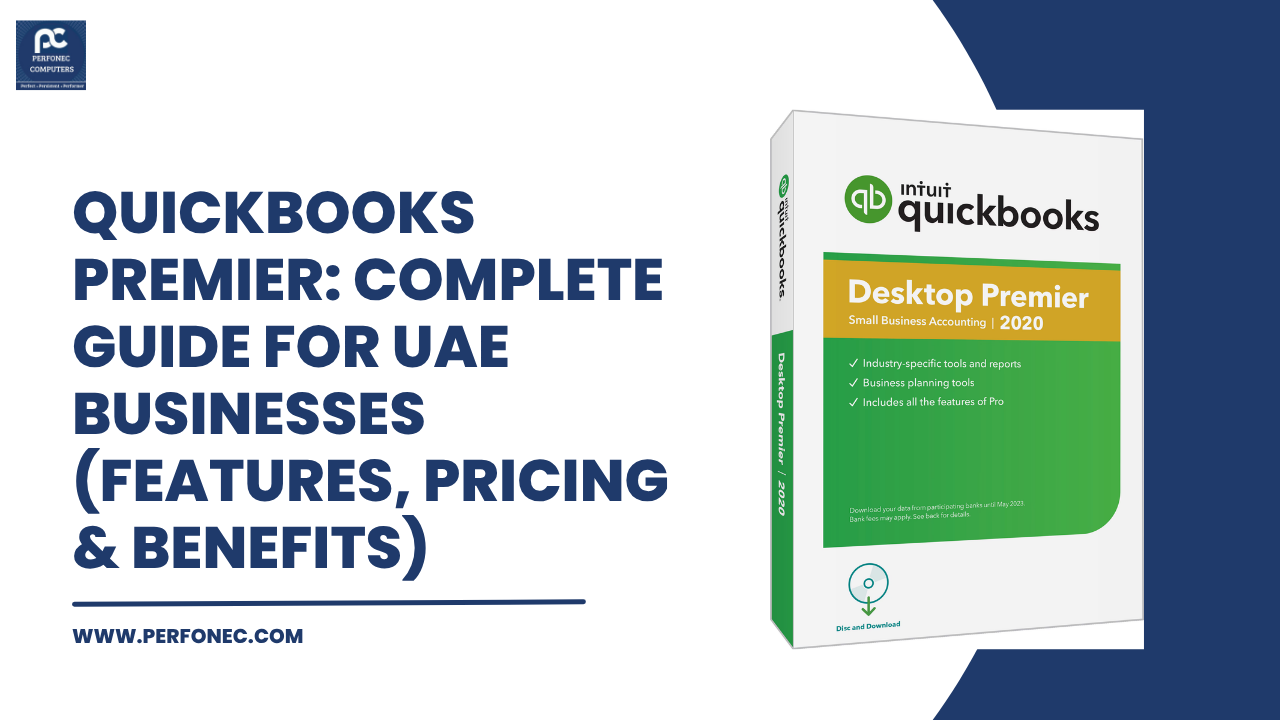
Introduction
Efficient financial management is essential for modern businesses in the UAE. While traditional accounting systems can handle basic tasks, they often lack flexibility, automation, and real-time access.
QuickBooks Premier https://perfonec.com/quickbooks-accounting-software/ is a powerful accounting solution designed to help businesses streamline operations, manage inventory, and stay compliant with UAE VAT regulations https://tax.gov.ae/.
What is QuickBooks Premier?
QuickBooks Premier is an advanced accounting software built for small to mid-sized businesses. It allows you to manage sales, purchases, inventory, financial reporting, and projects from a single platform.
Businesses looking for complete accounting systems can also explore https://perfonec.com/ for more solutions.
Key Features of QuickBooks Premier
- Multi-currency & multi-company support
- Sales, purchase, inventory & accounts management
- Track income, expenses, and projects
- Manufacturing & BOM (Bill of Materials) module
- Classes, cost centres, and budgeting tools
- 150+ customizable financial reports
- Fully compliant with UAE VAT laws https://tax.gov.ae/
QuickBooks Premier Pricing in UAE
Desktop License
- Starts from AED 1800
- Renewal may apply
Cloud Hosting Option
- Starts from AED 1600/year
- Includes secure cloud hosting https://perfonec.com/cloud-hosting-provider/
- Anytime, anywhere access
- Data protection and automatic backups
- 24/7 technical support
Benefits of QuickBooks Premier
1. Simplified Financial Management
Automate invoicing, expense tracking, and reporting using advanced accounting systems https://perfonec.com/.
2. VAT Compliance
Stay aligned with UAE tax regulations https://tax.gov.ae/ and avoid penalties.
3. Advanced Reporting & Insights
Generate over 150 reports to monitor and improve business performance.
4. Inventory & Project Management
Manage inventory, projects, and budgets efficiently in one place.
5. Cloud Accessibility
Access your data anytime using cloud-based accounting https://perfonec.com/cloud-hosting-provider/.
6. Data Security
Protect your business data with secure backup solutions.
Why Choose Perfonec?
Perfonec provides complete accounting and IT solutions https://perfonec.com/ including:
- Software setup and installation
- Cloud hosting services
- Data migration
- Ongoing technical support
Conclusion
QuickBooks Premier is an ideal solution for UAE businesses looking to improve efficiency, ensure compliance, and streamline financial processes. With flexible pricing, powerful features, and cloud capabilities, it supports business growth and smarter decision-making.

.png)
Businesses in the UAE are rapidly adopting digital solutions to improve efficiency and ensure VAT compliance. However, many business owners still struggle with one important question — should they choose ERP or accounting software?
Understanding the difference between these two solutions is essential to make the right decision for your business.
What is Accounting Software?
Accounting software is designed to manage financial transactions such as invoicing, expenses, payroll, and tax reporting. It focuses mainly on financial management and helps maintain accurate records.
Popular tools like QuickBooks, TallyPrime, and Zoho Books are widely used by small and medium businesses in the UAE.
Key Features:
- Invoice creation and billing
- Expense tracking
- VAT calculation and reports
- Financial reporting
- Bank reconciliation
Accounting software is ideal for businesses looking for a simple and cost-effective way to manage finances.
👉 Learn more: https://www.perfonec.com/
What is ERP Software?
ERP (Enterprise Resource Planning) software is a complete business management solution that integrates multiple departments into one system. It goes beyond accounting and connects operations like sales, inventory, HR, and procurement.
Solutions like Odoo offer an all-in-one platform to manage business processes efficiently.
Key Features:
- Financial management and accounting
- Inventory and supply chain management
- HR and payroll
- CRM and sales tracking
- Real-time analytics and reporting
ERP software is best suited for growing businesses that need scalability and automation.
👉 Explore ERP solutions: https://perfonec.com/accounting-software/#
ERP vs Accounting Software: Key Differences
1. Scope of Functionality
Accounting software focuses only on financial tasks, while ERP covers all business operations.
2. Business Size
Accounting software is ideal for small to medium businesses, whereas ERP is better for growing and large enterprises.
3. Integration
Accounting tools work independently, while ERP integrates multiple departments into one system.
4. Cost
Accounting software is more affordable, while ERP requires a higher investment but offers broader capabilities.
5. Scalability
Accounting software has limited scalability, whereas ERP systems grow with your business.
Which One Should You Choose in UAE?
Choose Accounting Software If:
- You run a small or medium-sized business
- You need basic financial management
- You want a cost-effective solution
- Your focus is on VAT compliance
👉 Get started: https://perfonec.com/accounting-software/
Choose ERP Software If:
- Your business is growing rapidly
- You manage multiple departments
- You need automation across operations
- You require real-time insights
👉 Discover more: https://perfonec.com/odoo-erp/#
Why UAE Businesses Are Moving Towards ERP
As businesses expand in Dubai, Abu Dhabi, and Sharjah, they need more than just accounting tools.
They require integrated systems that:
- Improve efficiency
- Reduce manual work
- Provide better control over operations
This is why many companies are shifting to ERP solutions.
Why Choose Perfonec Computers?
Perfonec Computers helps businesses choose and implement the right software based on their needs.
- Expert consultation
- Smooth implementation
- Training and support
- Customized solutions
👉 Visit: https://www.perfonec.com/
Conclusion
Both ERP and accounting software are essential for business management, but the right choice depends on your needs.
If you require simple financial management, accounting software is the best option. However, if you want complete business automation and scalability, ERP is the right investment.
Choosing the right solution today will help your business grow faster and stay competitive in the UAE market.
As the UAE gears up for the implementation of e-invoicing in 2026–2027, business owners are increasingly seeking clarity on what this significant shift entails. With the government's push towards digital transformation and compliance, understanding the nuances of UAE e-invoicing has never been more crucial. This blog post aims to answer the 20 pressing questions that every business owner is asking, guiding you through the essentials of e-invoicing and preparing you for the upcoming changes.
Transitioning to e-invoicing presents a wealth of opportunities for businesses to streamline their operations, enhance compliance, and improve cash flow management. In this post, we will explore the key benefits of adopting e-invoicing, dispel common misconceptions, and provide actionable insights tailored for 2026–2027. By equipping yourself with the right knowledge, you can leverage this digital evolution to transform your business practices and maintain a competitive edge in a rapidly changing economic landscape.
Understanding UAE e-invoicing: What business owners need to know for 2026–2027
As the UAE prepares for the implementation of e-invoicing regulations by 2026–2027, business owners must familiarize themselves with the new framework. E-invoicing aims to streamline invoicing processes, making them more efficient and transparent. This transition will require businesses to adopt technological solutions that allow them to create, send, and store electronic invoices. By understanding the requirements and deadlines associated with the rollout, owners can implement necessary changes to their accounting systems, ensuring compliance and preventing potential penalties.
Moreover, it’s essential for business owners to grasp the implications of e-invoicing on operations and cash flow management. With real-time data access and automation, e-invoicing reduces manual errors and speeds up payment cycles. Companies can enjoy better financial management, as they will have accurate insights into outstanding invoices and cash flow predictions. Business owners should also consider investing in training their teams to effectively utilize the new e-invoicing systems, ensuring a smooth transition that unlocks the benefits of this digital advancement in their business practices.
Key benefits of UAE e-invoicing: Transforming your business practices in the upcoming years
UAE e-invoicing introduces a host of benefits that can significantly enhance your business operations in 2026–2027. One of the main advantages is the automation of invoicing processes, which minimizes human error and reduces processing time. With e-invoicing, businesses can issue invoices instantly, track their status in real-time, and streamline payments. This efficiency not only enhances cash flow management but also allows for better forecasting and budgeting. Moreover, the shift towards digital paperwork contributes to a greener environment by reducing the need for paper-based records.
Additionally, e-invoicing offers improved compliance with local regulations, which is crucial as the UAE continues to evolve its tax landscape. By adopting e-invoicing, businesses can ensure they meet government requirements, reducing the risk of fines or penalties for non-compliance. Furthermore, enhanced data analytics capabilities enable business owners to gain insights into their invoicing patterns and client behaviors, paving the way for informed decision-making. Overall, the transition to e-invoicing represents a strategic move that can bolster operational efficiency and improve financial health in the coming years.
Common misconceptions about UAE e-invoicing: Debunking myths and providing clarity for 2026–2027
Many business owners mistakenly believe that implementing UAE e-invoicing is a complicated and costly process, which can deter them from adopting it. In reality, the transition to e-invoicing is designed to be seamless and user-friendly. The UAE government has established clear protocols, templates, and compatible software solutions that can simplify the implementation for businesses of all sizes. As more companies embrace digital solutions, the initial investment often pays off in terms of efficiency, accuracy, and reduced operational costs, making the shift a worthwhile endeavor.
Another prevalent misconception is that e-invoicing eliminates the need for record-keeping and compliance with tax regulations. In truth, e-invoicing enhances these processes by ensuring accurate and timely documentation while remaining fully compliant with local laws. Businesses can enjoy enhanced data accuracy, automatic generation of digital records, and streamlined audits. By clearing these misconceptions, business owners can better understand the value of UAE e-invoicing, preparing them for the technological advancements that will take place in 2026–2027.
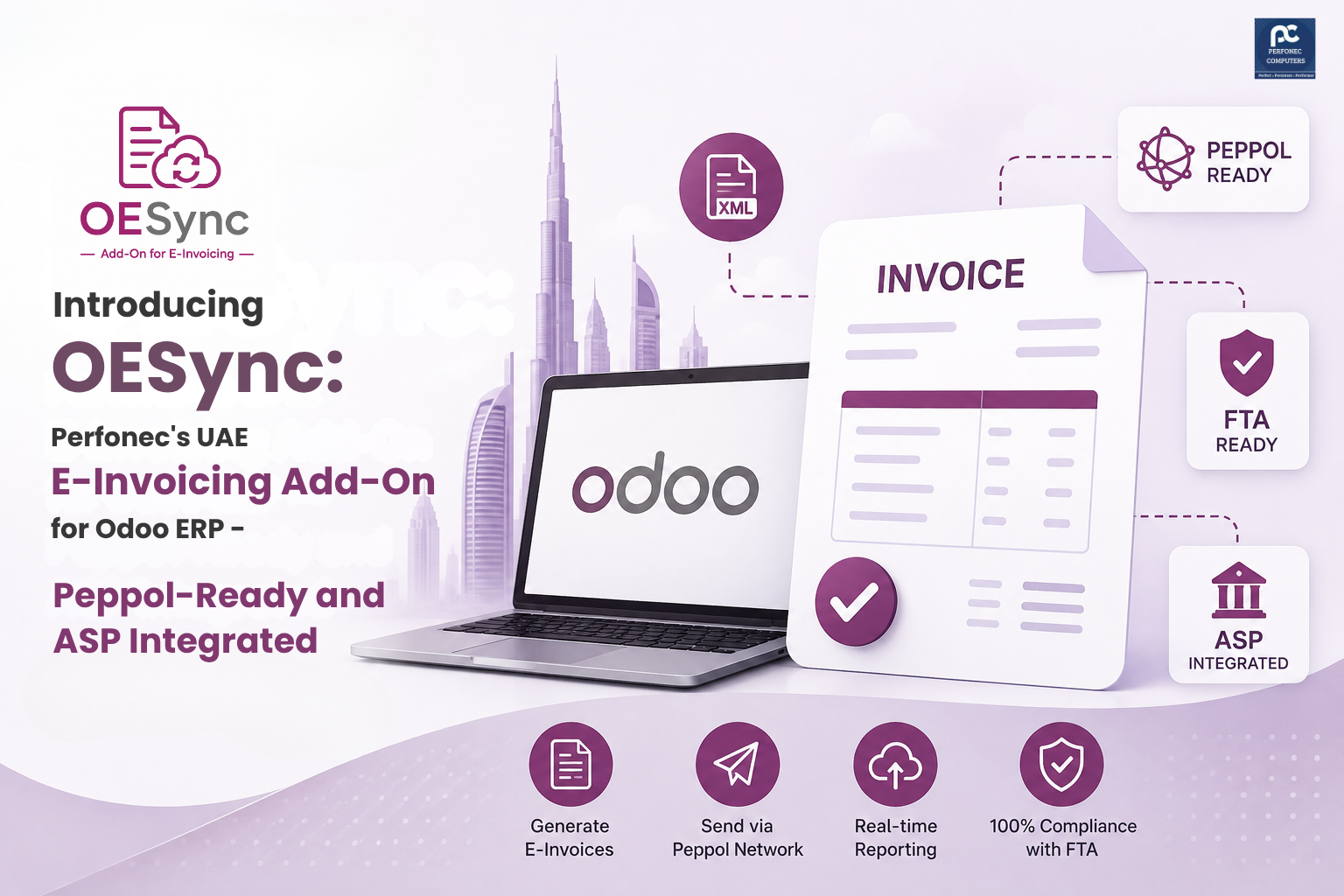
The UAE Ministry of Finance’s recent mandate requiring all B2B invoices from VAT-registered businesses to be transmitted through the Peppol network in PINT AE XML format by January 2027 poses a significant compliance challenge, particularly for those using Odoo ERP. As UAE Odoo users prepare for this transition, they must understand the intricate technical requirements and the implications of navigating the Accredited Service Provider (ASP) landscape. Most guides merely scratch the surface, glossing over the complexities that could leave businesses vulnerable to penalties if they fail to comply on time.
To address this pressing issue, OESync by Perfonec emerges as a critical solution for UAE businesses relying on Odoo ERP. This comprehensive add-on not only facilitates the required e-invoicing process—covering everything from PINT AE XML generation to secure ASP transmission—but also tackles the nuanced ASP challenge head-on. By managing all aspects of the ASP relationship, OESync allows businesses to focus on their core operations without the burden of ongoing technical dependencies. In this post, we will delve deeper into the e-invoicing mandate, unpack the complexities of the ASP problem, and highlight how OESync delivers a seamless solution for local businesses.
Understanding the urgent e-invoicing mandate for UAE Odoo users
The UAE Ministry of Finance has set a stringent timeline for B2B invoicing compliance that requires all VAT-registered businesses to transition to the Peppol network using the PINT AE XML format. Starting January 2027 for large enterprises and July 2027 for SMEs, businesses must adapt their invoicing practices to meet these new regulations. All B2B invoices issued after these dates must be structured and validated according to specific technical requirements, which include 17 mandatory fields such as supplier and buyer TRNs, VAT category codes, and structured address details. This directive fundamentally alters the invoicing landscape for UAE businesses, particularly those utilizing Odoo ERP, which does not natively support these complex compliance requirements.
UAE businesses running Odoo need to act swiftly to avoid falling behind the compliance curve. The urgency to adopt a reliable e-invoicing solution arises not only from the regulatory deadlines but also from the potential financial repercussions of non-compliance. Failure to fulfill the invoicing mandate could lead to severe penalties, amounting to AED 5,000 per month, plus AED 100 for each non-compliant invoice issued after the go-live date. To mitigate these risks, Odoo users must prioritize finding and implementing a solution like OESync by Perfonec that seamlessly integrates with their existing systems, ensuring compliance without disruption to their current workflows.
Navigating the complexities of the ASP problem and its implications
The ASP problem presents a multifaceted challenge for UAE Odoo users as they prepare for the mandatory e-invoicing regulations set by the UAE Ministry of Finance. An Accredited Service Provider (ASP) is not merely a checkbox for compliance; it represents a critical connection point between an Odoo instance and the Peppol network. As this integration requires ongoing management, businesses need to evaluate multiple ASPs based on their unique requirements, such as Odoo version, invoice volume, and industry specifics. Delaying this process can lead to costly penalties, as businesses with annual revenues exceeding AED 50 million must appoint an ASP by October 30, 2026, and all other VAT-registered businesses must do so by March 31, 2027. Missing these deadlines could result in substantial fines, further complicating the already tight timeline for compliance.
Moreover, many guides fail to adequately address the complexities and maintenance of the ASP relationship. Beyond just initial selections and submissions, ongoing operational dependencies will be required, including API credential management, monitoring the ASP's performance, and adapting to any changes they implement. For businesses lacking technical expertise, this can create significant operational burdens, distracting from core accounting functions. The misconceptions surrounding the simplicity of appointing an ASP often catch users off guard, leading to disruptions in invoicing processes. This understanding emphasizes the urgency of selecting the right solution, such as OESync by Perfonec, which streamlines the e-invoicing process and handles the ASP layer without the need for independent vendor management.
How OESync by Perfonec provides a seamless solution for UAE businesses
OESync by Perfonec addresses the intricate challenges faced by UAE businesses using Odoo ERP when it comes to compliance with the new e-invoicing mandate. By automating the complete invoicing process—from PINT AE XML generation to seamless transmission through an Accredited Service Provider (ASP)—OESync eliminates the operational burdens that typically fall on finance teams. The solution requires nothing more than a one-time setup, allowing your accounting staff to continue their usual workflow without modifications. With OESync, businesses gain peace of mind knowing that all 17 mandatory fields are validated prior to transmission, greatly reducing the risk of compliance failures and associated penalties.
Moreover, OESync simplifies the often cumbersome ASP relationship. Perfonec takes on the responsibility of managing ASP selection, onboarding, and ongoing support, freeing businesses from the complexities of independent API management and integration. This streamlined approach not only enhances operational efficiency but also assures compliance with the UAE Ministry of Finance’s requirements. With features such as multi-currency support and automatic mapping of fiscal positions, OESync stands out as a comprehensive solution that aligns perfectly with the needs of UAE VAT-registered businesses. This proactive approach ensures that firms can focus not just on compliance, but also on driving their core operations without interruption.